
Lesson 1 of 3Lifecycle and modernisation
How long does a lift last?
A lift is not one machine with one lifespan. Its ropes, brake, electronics, structure and car all age at different rates, for different reasons. Here is what decides how long each part lasts, the signs that parts are near the end, and how to plan for it.
There is no single answer.
People often ask how many years a lift will last. The honest answer is that a lift is many parts, and each one ages in its own way. Ropes and brake linings wear a little every time the lift runs. A controller may keep working for years after its maker stops supplying spare parts. The guide rails often outlast the parts around them.
So the useful questions are: which parts of your lift are wearing, which can still be repaired, and which are reaching the end of their support?
One benchmark
NHS guidance for lifts in healthcare buildings says new installations should be designed “with a minimum life expectancy of 20 years, when suitably maintained. It is important that spare parts (or suitable alternatives) are available for 20 years. This could be verified at the tendering stage.”
That is a design expectation for one type of building, not a forecast for any particular lift. In our view, it is most useful for the point it makes about spare parts: a lift lasts only as long as you can keep repairing it.
The same guidance notes that “New lifts eventually age, and may require refurbishment to improve their appearance and efficiency, or to take advantage of technological change.” Ageing is normal. The aim is to see it coming.
How each part ages.
Select a number to see a group of parts and what decides how long they last.
Moving parts that wear
The traction sheave, brake linings, ropes, guide shoes or rollers and car door gear all wear with use. How fast depends on how many journeys the lift makes, the loads it carries, its surroundings and how well it is maintained. These parts are designed to be adjusted, repaired or replaced during the lift’s life.
Electronics
The controller, drive, door operator, car panel and landing push buttons. Electronics can work for many years, but they often reach the end of their useful life when the maker stops supplying spare parts or support, rather than when they wear out.
The lift phone
The autodialler that connects the alarm to a rescue service depends on outside phone and mobile networks. When a network closes, the unit may need replacing even if it works perfectly. The analogue switch-off is the current example.
The structure
The guide rails, counterweight, car frame and buffers, along with the shaft itself. These parts are usually kept when a lift is modernised, if they are in good condition and suit the new equipment.
The car interior
Walls, floor, ceiling, lighting and handrails. These age with use and wear, damage and changing tastes, and may need updating for accessibility. A car refurbishment is often about appearance as much as condition.
What makes parts age faster.
Two identical lifts can age very differently. In our experience, these are the things that make the most difference:
| Factor | What it does | What you can do |
|---|---|---|
| Use | More journeys and door cycles mean more wear on the parts that move. | Tell your contractor if use changes, for example when a building fills up or its use changes. |
| Load | Regular heavy loads, such as goods or building materials in a passenger lift, add wear and can damage the car. | Use a goods lift where there is one, and protect the car during moves and building work. |
| Surroundings | Water, dust, heat, damp and building work all shorten the life of parts. | Keep the pit dry and the machine room clean, cool and secure. See our lesson on water in a lift pit. |
| Maintenance | Regular visits keep parts adjusted, clean and lubricated, and find wear early. | Keep a maintenance contract that suits how the lift is used, and act on what the engineer reports. |
| Misuse and vandalism | Forcing doors, jumping in the car and damage to fixtures cause faults and wear. | Report damage quickly and consider stronger fixtures where vandalism is common. |
Maintenance is also a legal duty for lifts used at work. The law expects equipment to be kept in good order, which is what helps parts reach a full life.
The law
“Every employer shall ensure that work equipment is maintained in an efficient state, in efficient working order and in good repair.”
The Provision and Use of Work Equipment Regulations 1998, regulation 5(1)
When spare parts run out.
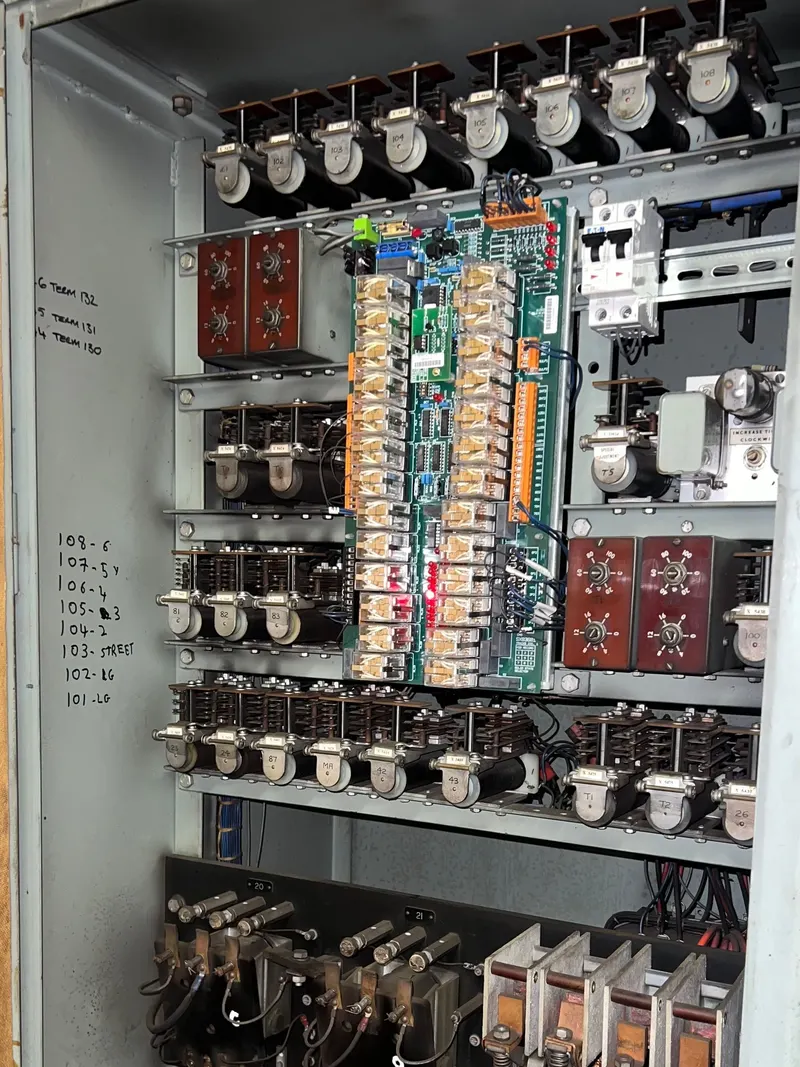
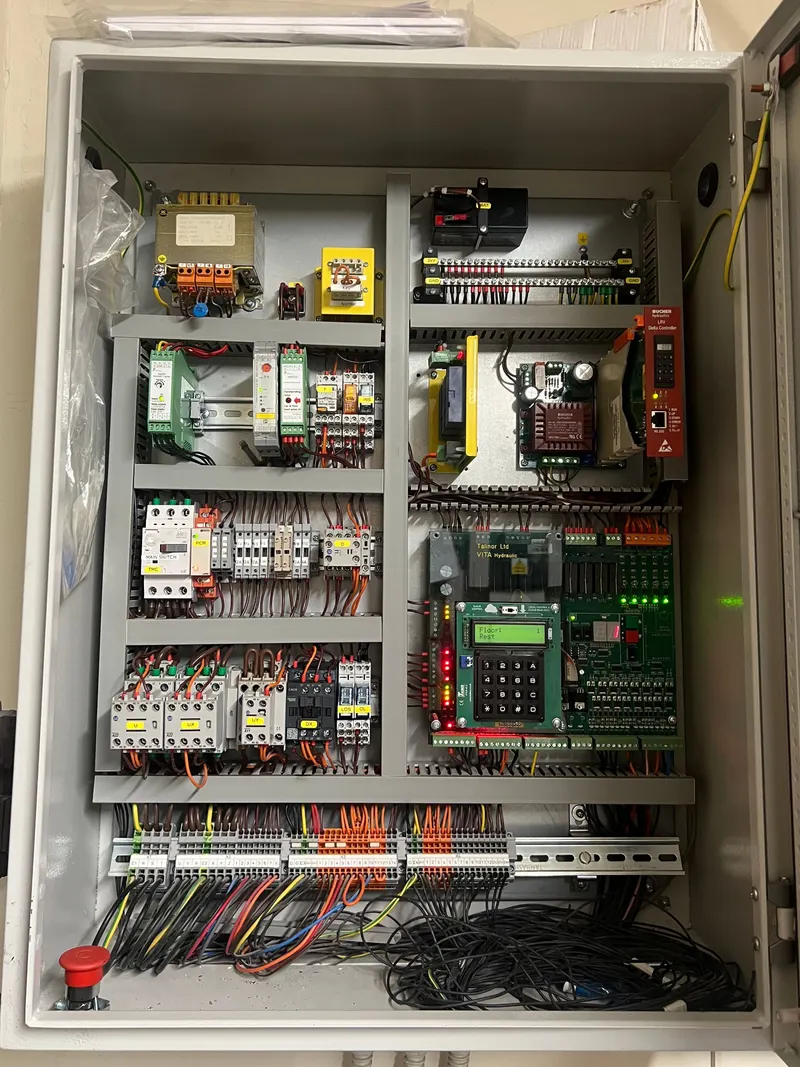
For electronics, the end often comes through obsolescence. A controller can run reliably for many years, then one board fails and the maker no longer supplies it. The choice is then between searching for second-hand or repaired parts and replacing the controller, often while the lift stands idle.
An older controller
A modern controller
Some lifts also need special tools or software that only the original maker supplies. LEIA’s code of practice says a lift’s information manual should include information on essential special tools and software access codes. In our view, it is worth checking that you have them, because without them some faults can be hard for anyone else to fix. Our lesson on lift fault codes explains why.
Lift phones age in a different way again. The European Lift Association points out that buildings are “built to last for more than 40 years and up to 100 years”, but that “Telecommunication technologies are changing at a pace which is significantly faster than the overall building technologies.” The government has warned that most lift alarms still rely on analogue phone lines, which are being switched off.
Questions worth asking your contractor:
- Which parts of our lift are no longer supported by their maker, or soon will not be?
- Are spare parts available for them, and how long would a replacement take to arrive?
- Do we hold the special tools, software and documents needed to maintain the lift?
- What is our lift phone connected to, and will it keep working after the analogue switch-off?
Signs that parts are near the end.
In our experience, these signs suggest that some parts are reaching the end of their life, or their support:
- More breakdowns. A rising number of call-outs, or the same fault coming back. Our lesson on measuring lift performance shows how to track this.
- Repeated defects in examination reports. The same items coming up in each thorough examination report. See how to read a LOLER report.
- Longer waits for parts. Repairs that take weeks because parts have to be found or rebuilt.
- Poor ride or levelling. Rough starts and stops, or the car stopping above or below the floor.
- Door problems. Doors that are slow, noisy or keep reopening, often from worn door gear.
- Accessibility gaps. Controls, signals or car size that no longer meet the building’s needs. See our lesson on accessible lifts and the law.
None of these means the whole lift needs replacing. Often, replacing the worn or unsupported parts is enough. Our guide to repairing or replacing an ageing lift sets out how to weigh that decision.
Planning ahead.
In our experience, parts that fail without warning cost more, in money and in time without a lift. A little planning lets you replace them on your own timetable.
Keep good records
Fault and visit records show which parts are giving trouble. Our lesson on keeping a lift logbook explains how.
Ask for a survey
An engineer’s survey looks at each part’s condition, safety and spare parts, and says what needs attention and when. NHS guidance recommends an audit of existing lifts to BS EN 81-80, the standard for improving the safety of existing lifts.
Agree priorities and a programme
Turn the survey into a list of priorities with dates, so the most urgent parts are dealt with first.
Budget for it
Set money aside before it is needed. If leaseholders contribute to the cost, allow time for any consultation the law requires.
When a programme includes replacing major parts, it becomes a modernisation project. The next lesson, a modernisation project, step by step, follows one from survey to handover, and our lift modernisation page explains how we can help.
Check your understanding.
Three quick questions on this lesson. Choose an answer to check it, or open the answer below each question.
-
Your lift’s controller still works, but your contractor says the maker no longer supplies its circuit boards. What is the main risk?
Show the answer
B. If a board fails, the lift could be out of service for a long time while a replacement is found. Electronic parts often reach the end of their useful life when spare parts or support run out, not when they wear out. Without spares, a single failure can mean a long outage. That is the time to plan a replacement.
-
Which of these parts is usually kept when a lift is modernised?
Show the answer
B. The guide rails. The guide rails are part of the structure, and are usually kept if they are in good condition. Controllers and fixtures are among the parts most often replaced.
-
Which of these is most likely to shorten the life of a lift’s parts?
Show the answer
B. Water getting into the lift pit after heavy rain. Water corrodes steel parts and can damage electrical equipment in the pit. Regular maintenance and good records help parts last longer and show problems early.
Sources.
The primary sources for this lesson. We checked them when the lesson was last updated on 18 October 2026. How we research and check our lessons.
Finished this lesson? Mark it as complete to see your progress on the course page. This is saved in your browser only.
Keep learning.
Related reading
Not sure where your lift stands?
Our engineers survey lifts and report in plain English on their condition, which parts are near the end of their life or support, and what to plan for first.
Common questions.
Quick answers to common questions about this topic.
How long does a lift last?
There is no single answer, because a lift’s parts age at different rates. Moving parts such as ropes and brake linings wear with use, electronics often reach the end of their life when spare parts or support run out, and the structure can last much longer. NHS guidance for healthcare buildings expects new lifts to be designed for a minimum life of 20 years when suitably maintained. Your contractor or a lift survey can tell you where your lift stands.
Which lift parts wear out first?
In our experience, the parts that move and rub wear first: door gear, guide shoes or rollers, brake linings and ropes. How quickly depends on how much the lift is used, the load it carries, its surroundings and how well it is maintained.
Can a lift last longer with good maintenance?
Yes. Regular maintenance finds wear early and keeps parts adjusted, clean and lubricated, which helps them last. The law requires work equipment to be maintained in an efficient state, in efficient working order and in good repair. Maintenance cannot make spare parts available again once a maker stops supplying them.
Do I have to replace a lift when it gets old?
No. Age alone does not make a lift unsafe or require replacement. Many owners replace worn or unsupported parts in stages, or modernise the main parts while keeping the structure. The right answer depends on the lift’s condition, its parts and the building’s plans.