Every property manager with an older lift faces the same conversation, sooner or later. The lift has tripped four times this quarter. Parts are getting harder to source. The latest engineer report uses words like "intermittent" and "monitor." The question lands on the desk: do we keep repairing this, or is it time to replace?
The honest answer is almost never as binary as the question. There is usually a third option in the middle, and the framing of the choice tends to obscure it. This article sets out how we recommend property managers think about the decision, with a structure you can apply to your own building.
The wrong question, asked too often
Repair versus replace is a false binary. For most ageing lifts in commercial and residential use, there are three real options.
- Continue to repair. Address faults as they happen, keep the existing controller, drive, ropes, and car. Accept a degrading reliability curve.
- Modernise. Replace the parts that fail or are obsolete, typically the controller, door operator, fixtures, sometimes the ropes and motor, while keeping the structural elements. The car interior and the well stay.
- Replace. Strip the lift out and install a new one in the same shaft. Full new equipment, new compliance baseline, new lifecycle.
The middle option is the one most property managers leave out of the conversation. A well-scoped modernisation costs less than half of a full replacement, can usually be staged over weekends to limit downtime, and adds 15 to 20 years of serviceable life. It is the right answer for a large proportion of buildings, and it is the one that good engineering judgement reaches for first.
Start with three numbers, not one
Before any contractor walks the lift, get three numbers in front of you.
Annual repair spend, last three years
Add up everything: call-out fees, parts, additional labour, out-of-hours premium. Compare year on year. A flat number is normal. A doubling year on year is a signal.
Downtime hours, last twelve months
Count the hours the lift was out of service. Be honest about long restoration windows where parts had to be sourced from Europe or the Far East. Downtime is a soft cost to the contractor and a hard cost to the building.
Remaining serviceable life of the controller and drive
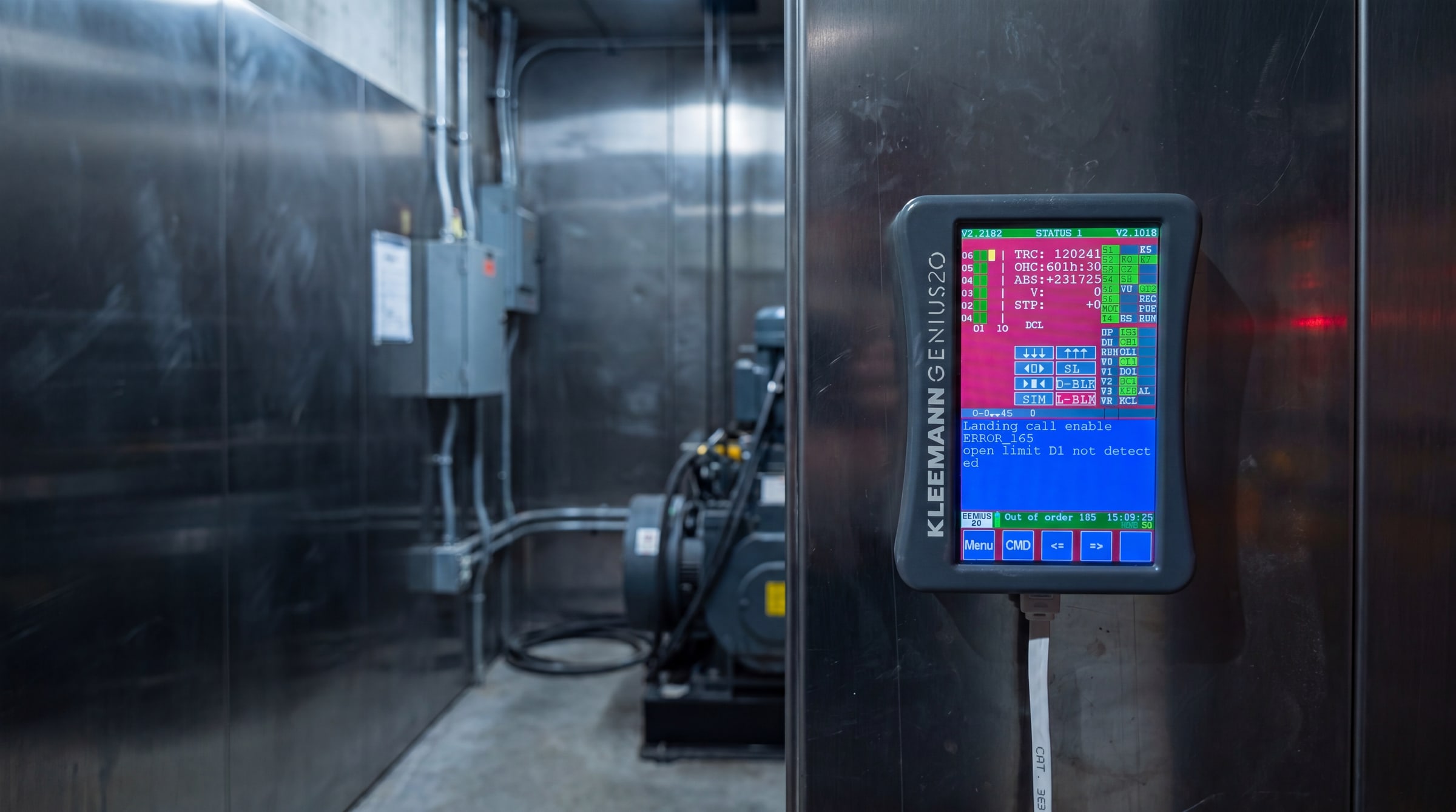
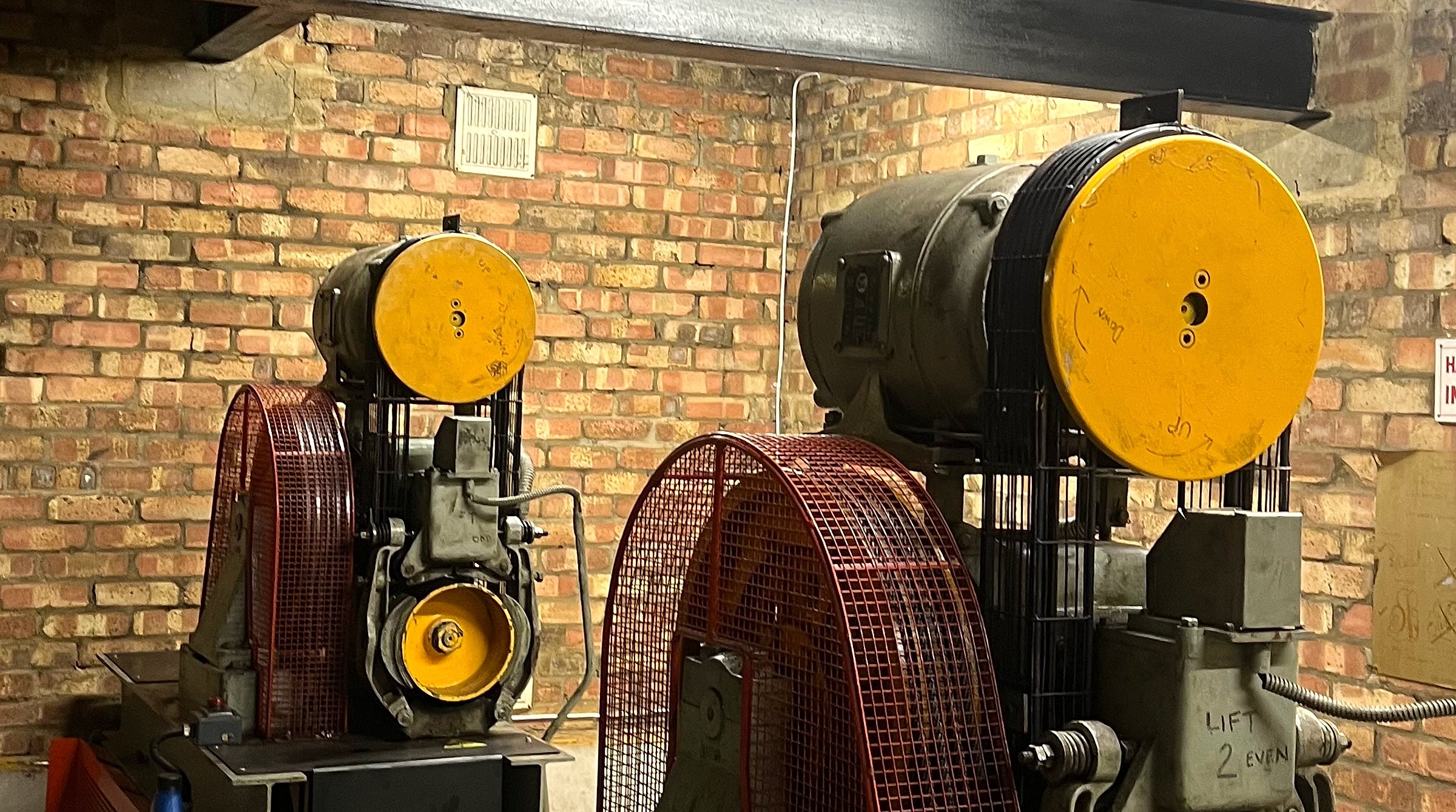
Ask your contractor for an honest assessment in writing. Controllers from the 1980s and early 1990s are now genuinely difficult to support. Replacement boards are often pulled from breakers' yards or hand-rebuilt. Door operators of the same era are sometimes worse. If the engineer's answer is "we will keep nursing it," that is data.
These three numbers together give you a picture that no single fault report can. They turn the conversation from emotional to analytical.
The eight signals that tip the balance
Across hundreds of surveys, the same eight signals come up. None of them on its own forces a modernisation. When three or more are present, it is time for a full survey and a serious conversation.
- Parts have become non-stock items. Spares for the controller, door operator, or fixtures now require remanufacture, salvage, or extended European lead times.
- Repair spend has doubled in three years. The trajectory matters as much as the absolute number. A sharp upward curve almost always continues.
- Downtime is breaching SLA or contract thresholds. If residents or tenants are noticing, you have crossed an important line.
- Energy use is materially above modern equivalents. Older motor-generator sets and pre-regenerative drives can consume two to three times the electricity of modern equivalents. For high-traffic lifts, the operating-cost gap pays back faster than you would expect.
- Ride quality has degraded noticeably. Slow door open and close, levelling errors, rough acceleration. These are not just comfort issues. They are leading indicators of mechanical wear.
- Accessibility standards have moved beyond the equipment. If the cab does not meet current BS EN 81-70 expectations for accessibility, you will face this question eventually anyway. Bundling it into a modernisation is cheaper than addressing it separately later.
- Compliance reports flag the same items repeatedly. When successive LOLER reports keep noting "monitor" against the same components, the equipment is asking to be retired.
- A change in building use, fire strategy or accessibility standards is in scope. If anything about the building is changing, the lift will be drawn into the conversation. Better to lead than be led.
Three or more of these signals in the same lift usually means modernisation. Five or more usually means replacement. Two or fewer means keep repairing, but watch the trend.
What "modernise" actually means
Modernisation is not a single product. It is a scope of work, and the scope can be tightly defined to the equipment in front of you. A typical residential modernisation might include:
- New controller, including new wiring loom and traveller cable
- New door operator and locks at every landing
- New car operating panel, landing fixtures, and indicators
- New ropes and safety gear inspection
- Cab interior refurbishment, with lighting and ventilation upgrades
- Bringing the equipment into line with current standards including BS EN 81-20, 81-50, and 81-70 where applicable
For traction lifts, the motor may be retained, replaced, or upgraded to a permanent-magnet machine depending on age and condition. For hydraulic lifts, the pump unit and the valve block are the points of focus, and modern valve blocks can transform ride quality and energy use without changing the cylinder or jack.
What "replace" actually means
Full replacement is a structural decision. Everything comes out: the car, the guides, the machinery, the controller, the doors. The shaft itself is reused, sometimes with structural alterations to support a different machine arrangement. New equipment goes in. The compliance clock resets.
Replacements take longer than modernisations. Six to twelve weeks of downtime is normal for a single lift, depending on access, scope, and lead times. In a multi-lift bank, replacements can be sequenced so at least one lift stays available. In a single-lift building, the impact on residents has to be planned for very carefully.
Budgeting for the decision, not just the work
Whichever option you take, the budget needs to include more than the headline figure.
- Surveys and design. A proper modernisation or replacement starts with a survey, a specification, and often an interface study with the building fire strategy.
- Compliance work. Bringing the lift to current standards may pull in adjacent works: lobby alterations, fire-rated doors, accessible signage.
- Temporary disruption. Concierge cover, resident communications, alternative access for accessibility users. Budget for these explicitly.
- Sinking-fund implications. For leasehold blocks, the decision interacts with the section 20 process and the long-term reserve. Note that the maintenance contract carries its own Section 20 test, at a lower threshold than works. Most managing agents we work with are now bringing this into 10-year capex plans.
A worked example: a 1990s residential lift
A managing agent in south London came to us with a single passenger lift in a six-storey block, installed in 1992. Annual repair spend had risen from £1,800 in 2022 to £4,400 in 2024, with three multi-day outages in the last twelve months. Door operator parts had become salvage-only. LOLER reports flagged the controller as "monitor for upgrade" two cycles running.
A full replacement was quoted at roughly £85,000 to £95,000 with an eight-week downtime. A modernisation scope, retaining the well, guide rails, and machinery beam, came in at £42,000 with a three-week intensive programme and weekend cut-overs to limit weekday impact. New controller, new door operator, new fixtures, new ropes, full cab refurbishment, current EN 81-20 compliance.
We recommended modernisation. The block voted to proceed at the next AGM. The lift now has a fresh 15- to 20-year horizon, repair spend has fallen back to under £1,000 a year, and the building benefits from a noticeably better ride. The decision saved roughly £45,000 against the replacement quote.
A real repair example: Arthur Stanley House
At Arthur Stanley House, a nine-stop passenger lift had been out of service for around three months. Durant replaced nine suspension ropes and returned it to service before the customer's two-week deadline. This was a targeted repair, not a full replacement. The case study does not establish the right option for a different lift; a condition survey and upgrade assessment should establish that scope.
When to call us in
The right time for an independent survey is when you have two or three of the signals above, and you want a recommendation that is not biased toward selling you the biggest possible job. Our modernisation surveys are scoped to give you three options in writing, with honest pros and cons, so you can take the decision to the board, the residents, or the freeholder with a clear case in either direction.
If the answer is to keep repairing, that is fine. We will tell you. The wrong answer is to keep spending without a plan.
Need an honest survey on an ageing lift?
We provide free modernisation surveys across London, Kent and the South East. You get three options in writing: continue, modernise, replace. With costs, downtime, and a recommendation we are happy to defend.