When a lift fails with people inside, on a quiet evening, on a bank holiday, or right in the middle of school pick-up, the response that happens in the first five minutes shapes the next two hours. We have attended a lot of breakdowns. The same patterns come up again and again. This is the plan we want every concierge, FM lead, building manager, and front-of-house team to follow.
It is short on purpose. Print it. Stick it next to the alarm panel.
Why the first five minutes matter most
When a passenger is trapped in a stationary car, three things happen in quick succession. They press the alarm. They check their phone. They press the alarm again. What they need from your side is the same three things, in the same order: a calm voice acknowledging them, an accurate description of what is happening next, and an honest estimate of when help will arrive.
None of those three things require you to fix the lift. They require you to communicate well. Most of the complaints we hear from trapped passengers, when we debrief afterwards, are not about how long it took the engineer to arrive. They are about how long it felt because nobody was talking to them.
Step 1: Confirm what has actually happened
Before reaching for the phone, take 30 seconds to understand the situation.
- Is anyone inside the car? Use the intercom or the alarm communication to ask. If the intercom is not working, knock and ask through the doors.
- Is the lift sitting at a floor with doors open, between floors with doors closed, or somewhere unexpected?
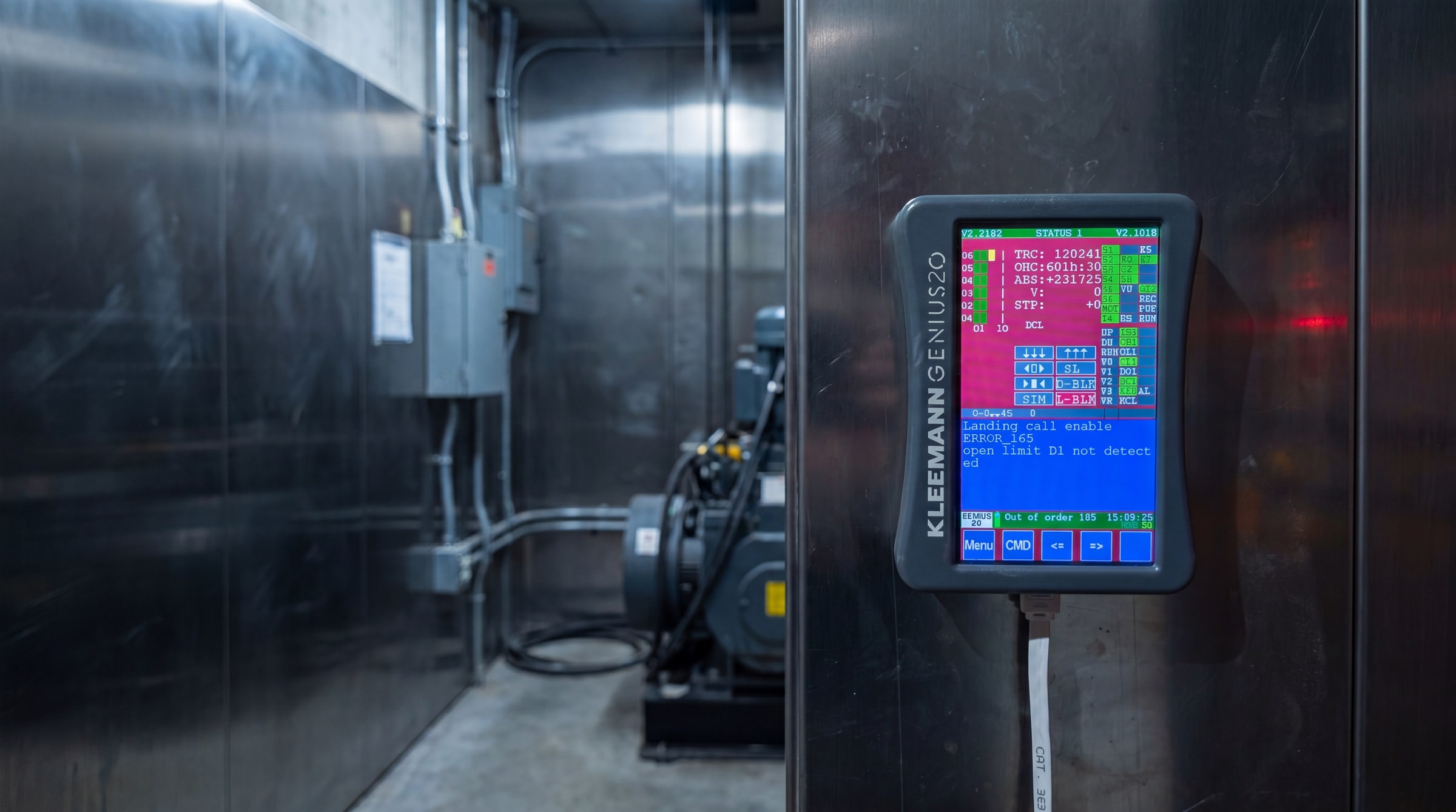
- Is there a visible fault indication on the car operating panel or the landing displays?
- Are any other lifts in the same bank operating normally?
You are not diagnosing the fault. You are gathering the eight pieces of information the dispatcher needs to send the right engineer. Stay factual.
Step 2: Communicate with anyone inside the car
If there are passengers inside, they should not have to ask twice for reassurance.
- Introduce yourself by name and role. "This is Sarah, I am the duty concierge."
- Confirm what is happening. "The lift has stopped. I am calling the engineer now."
- Tell them what not to do. "Please do not try to force the doors. The car is safe to stay in."
- Set an expectation. "I will call back within five minutes with an estimated arrival time."
- Then actually call back within five minutes. Even if you have no new information, the call itself reduces distress.
Passengers do not panic because they are stuck. They panic because nobody is telling them anything. Talk to them.
Step 3: Isolate access if needed
If the lift has stopped with the doors open at a floor, or if there is any risk of a passer-by stepping into the car, isolate access to the landing.
- Use the building's existing barrier, hazard tape, or signage. Most blocks keep a "lift out of service" sign behind reception.
- Do not enter the lift yourself unless your role and training authorise it.
- If there is any sign of water, smoke, smell of burning, or other immediate hazard, evacuate the area and call the fire and rescue service. Then call us.
Step 4: Call the right number, with the right information
When you call your lift contractor's emergency line, give the dispatcher these eight pieces of information in roughly this order. Memorise the sequence and you cut response time materially.
- Site address, including postcode and any access notes (basement entrance, side gate, reception times)
- Lift identifier, the lift number, name, or LOLER reference, if you have it
- Whether anyone is trapped in the car
- Current state of the lift, where the car is, doors open or closed
- Fault behaviour if visible, such as a code on the controller display or a particular alarm
- What you have already tried, for example, pressing reset on the landing panel
- Access constraints, such as locked motor room or restricted parking
- Best on-site contact number for the engineer's arrival call
Our own emergency line is 020 3488 4226. We answer 24/7 with a real person, not a queue.
Step 5: Hold position, do not improvise
Once help is on the way, the temptation is to keep trying things. Resist it.
- Do not force any door, anywhere in the building, including the motor room.
- Do not switch the lift off and on at the main isolator unless the dispatcher has specifically asked you to.
- Do not attempt a manual brake release. This requires training, certification, and the right tools. Improvised releases are the most dangerous moment in any breakdown.
- Keep the area clear so the engineer can work safely on arrival.
Step 6: Protect the post-incident evidence
If the engineer has to make a decision about whether to reinstate the lift, the more contextual information they have, the better the decision. Without disturbing the lift itself, capture:
- The time the fault first occurred and the time the call was made
- Any CCTV footage from the lobby that shows the lift going out of service
- Notes on any unusual behaviour in the days before, such as door re-opens, levelling errors, or odd noises
- The names and contact details of any passenger involved, with their consent
None of this slows the response down. It pays back when the engineer arrives, and it pays back again when the incident report is written and the cause is investigated.
Step 7: Document the close-out
When the lift is back in service, or when it has been isolated and a follow-up arranged, the work is not finished. Capture a short written record of what happened.
- Time of failure, time of call, time of arrival, time of resolution
- Whether anyone was trapped, how long for, what was communicated to them
- The engineer's findings and what was done
- Any follow-up work scheduled, with the date
- Any communication sent to residents, leaseholders, or tenants
This record protects the duty holder, supports the next compliance review, and feeds into pattern recognition. If the same fault repeats three times in six months, the documentation is what makes that visible.
Make this a card on the wall
The plan above is one A4 page when printed. We provide it as a laminated wall card for clients on our maintenance contracts, customised with the site's contractor numbers, lift IDs, and access notes. If you would like one for your reception or concierge desk, get in touch.
The best breakdown response is the one that does not need to improvise. Decide what your team will do in advance. Practice it once. Then trust the plan when it matters.
Need a printable response card for your site?
We provide a laminated A4 breakdown response card free to property managers across London, Kent and the South East. Customised with your lift IDs, contractor numbers, and access notes.