
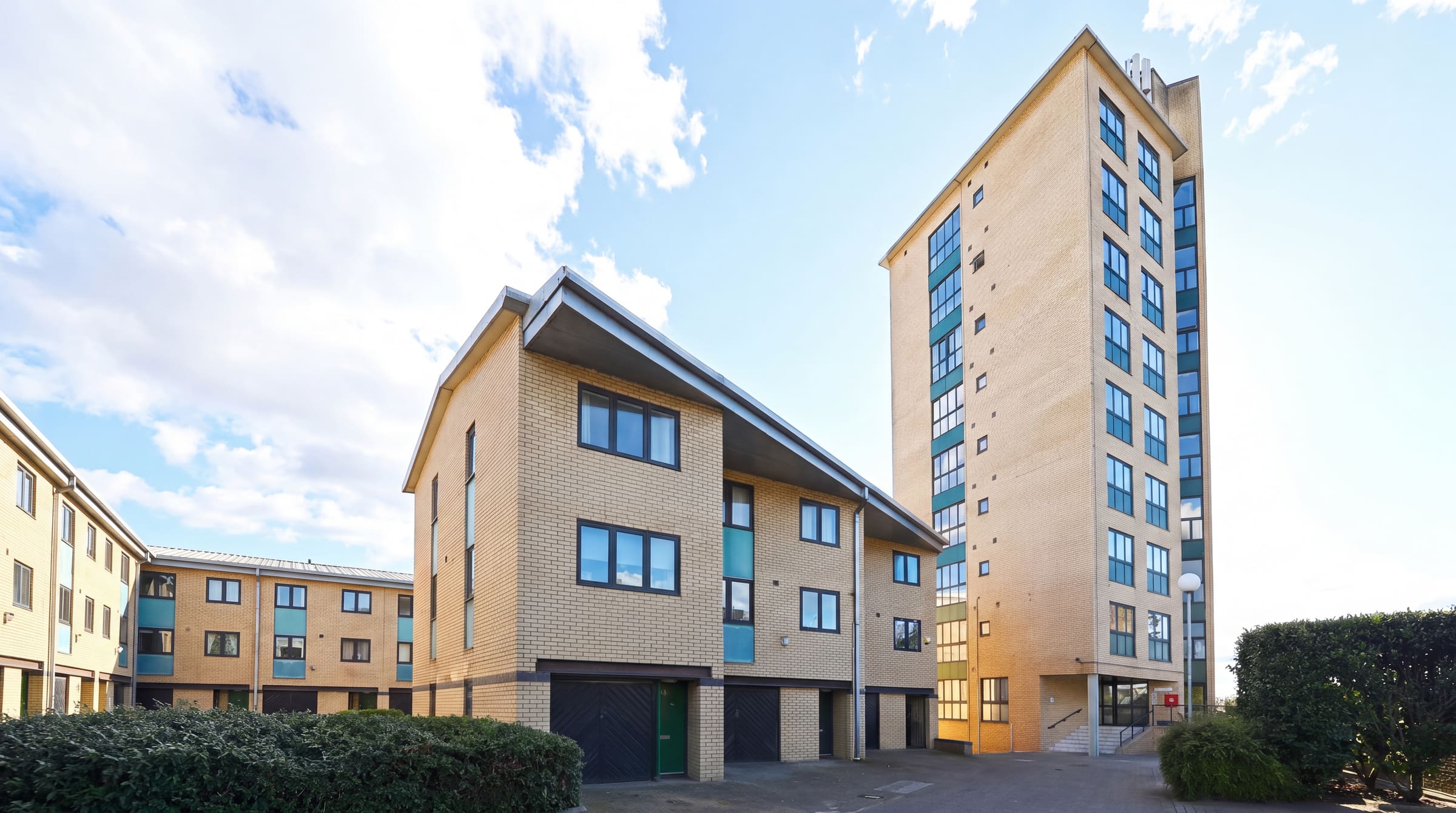
Case study · Greenwich
Recurring lift faults. Traced to their cause.
The only lift in a Greenwich residential block had broken down more than ten times in a few weeks, trapping residents and failing whole floors. This case file follows the diagnosis and the work our engineers carried out.
Scroll through the case fileSheet 02 · The brief
The only lift in the building.
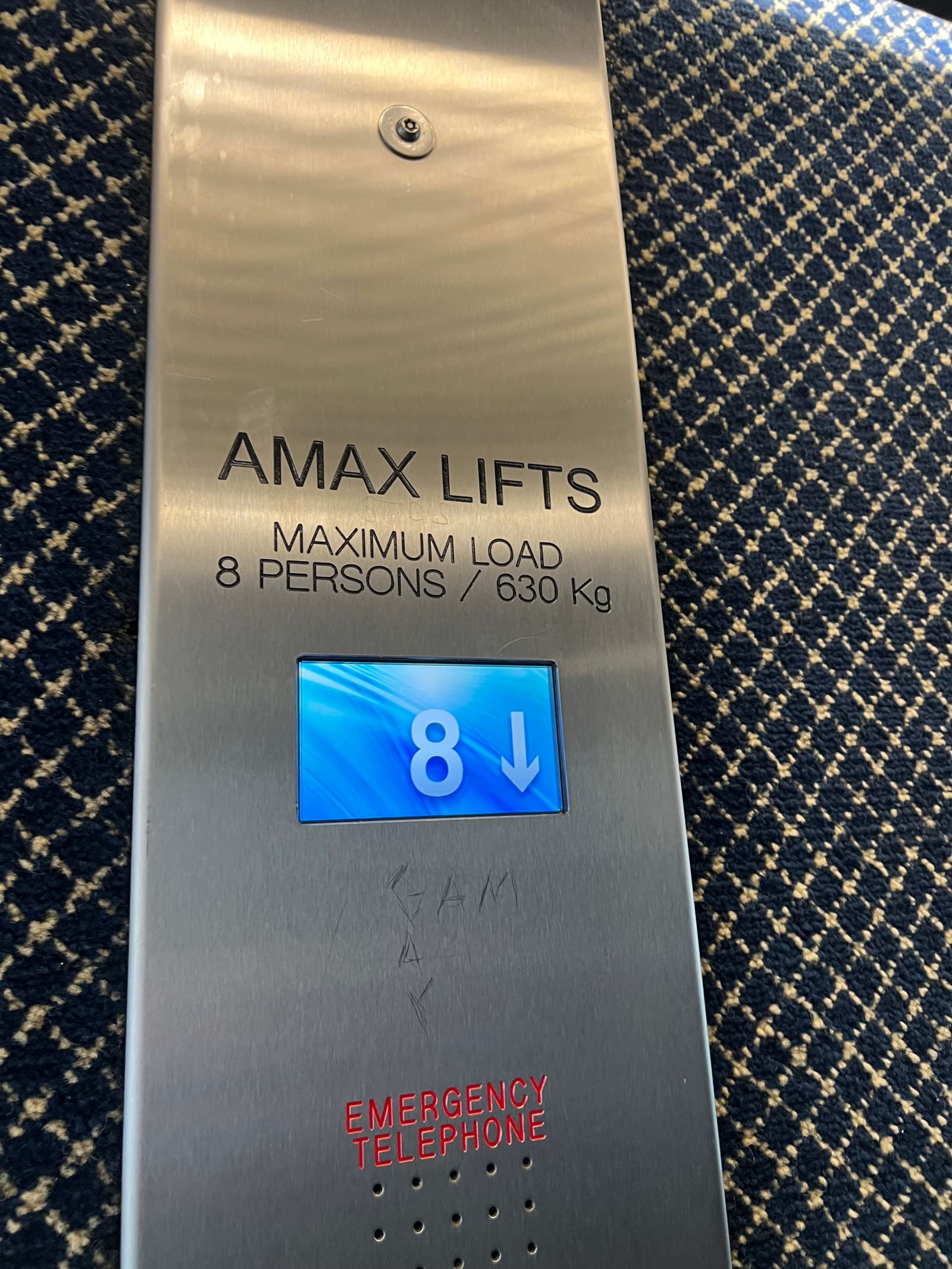
Over ten call-outs in a matter of weeks, on the one lift serving every floor. With no second car to fall back on, each fault meant residents trapped in the car or stuck on the stairs, and another out of order sign in the lobby.
Until then the routine had been the same every time: reset the controller, hand the lift back, wait for the next call. Instead of resetting it and leaving, our engineer booked the time to work through the lift properly.
Sheet 03 · Diagnosis
We read every fault.
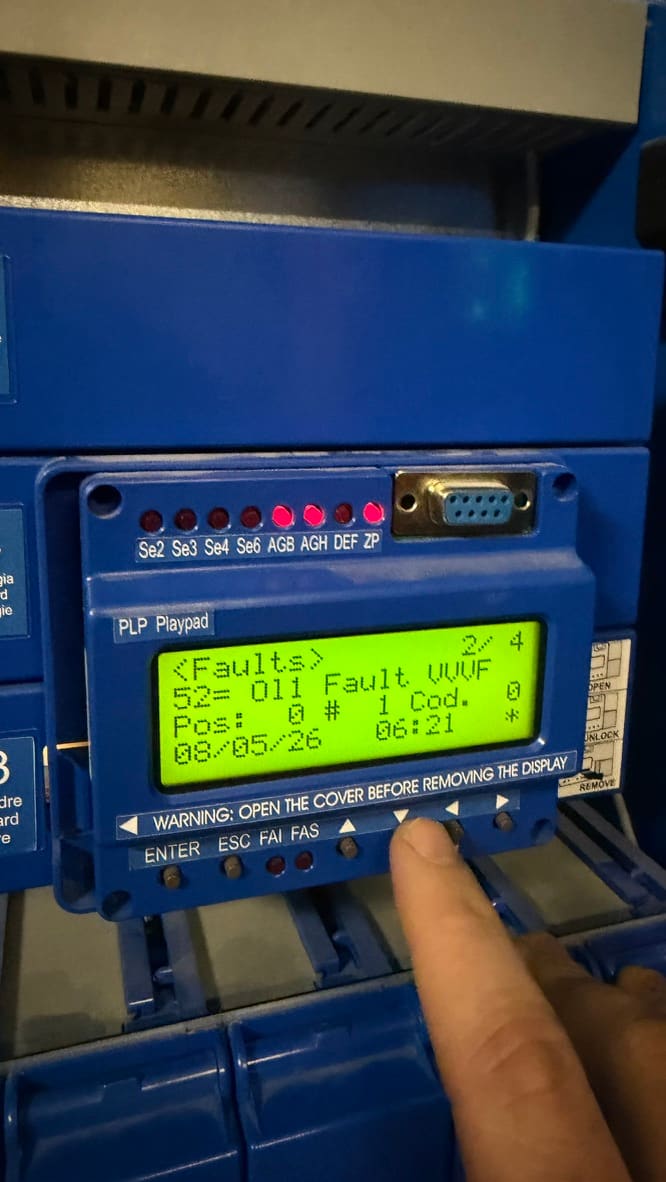
Not a reset. A full diagnosis. The controller logs every fault it has ever tripped, and we read all of it before touching a component. Three fault families kept repeating, and together they pointed at the drive, its programming and the brake.
011 VVVF FAULT
OC1 OVERCURRENT
F11 OVERLOAD
CAUSE TRACED. 3 REPAIRS SPECIFIED.
Sheet 04 · Repair 01
We refurbished the drive.
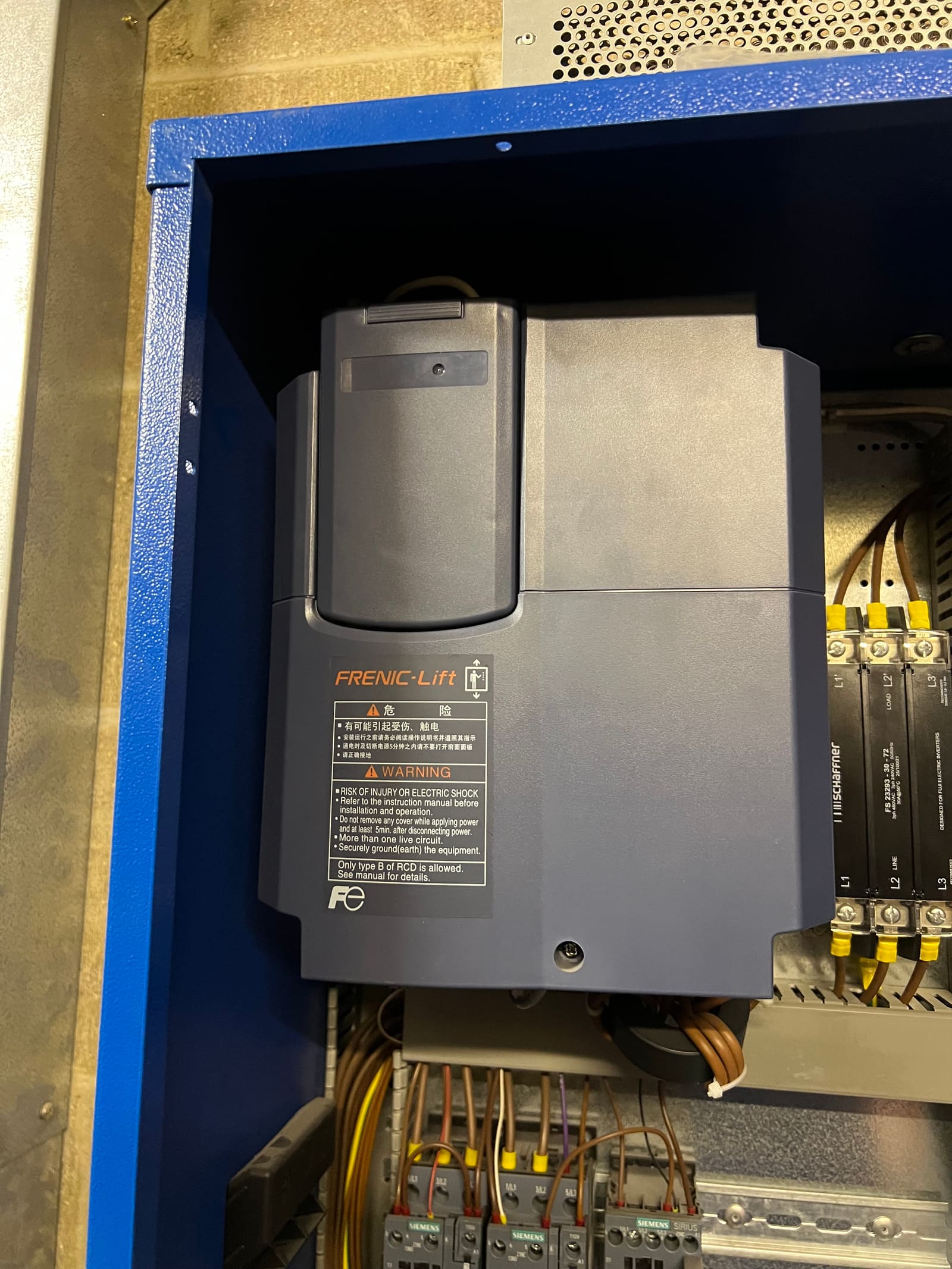
The variable-frequency drive that controls the motor was at the centre of the fault log. It was stripped, refurbished and rebuilt rather than reset and ignored, with its line filtering checked through at the same time.
Sheet 05 · Repair 02
Then reprogrammed it.
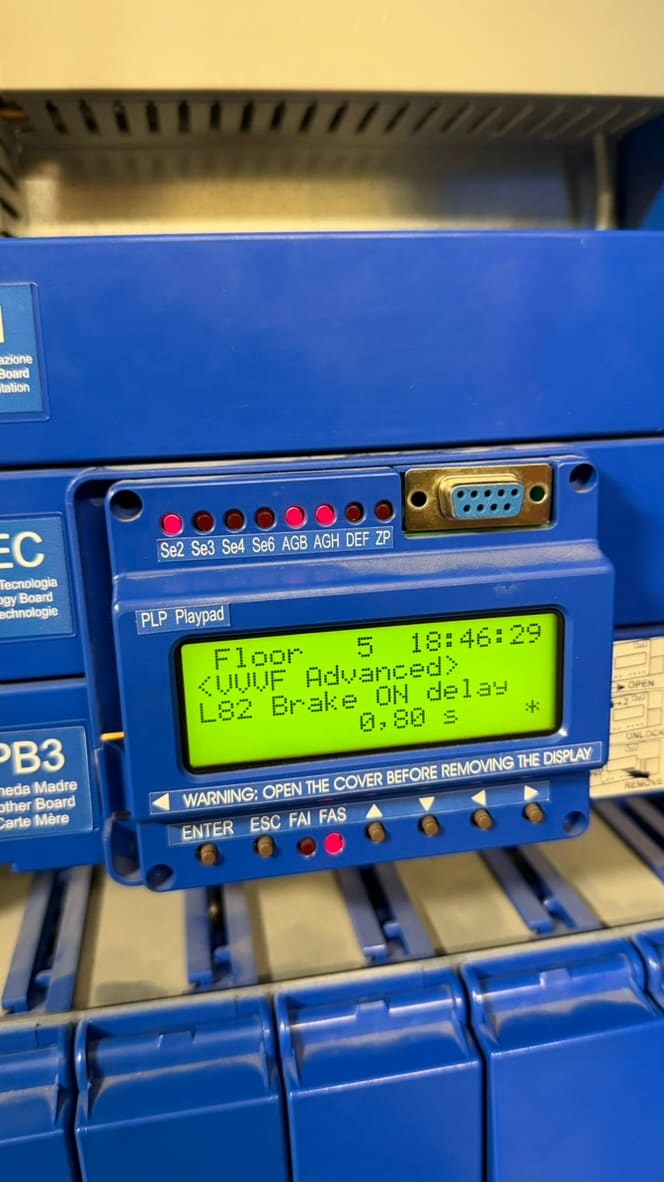
Brake timing and motion curves, retuned value by value at the controller. The photograph shows the brake on delay set to 0.80 seconds, one of the parameters that decides whether a lift stops cleanly or trips itself out.
Sheet 06 · Repair 03
And re-set the brake.
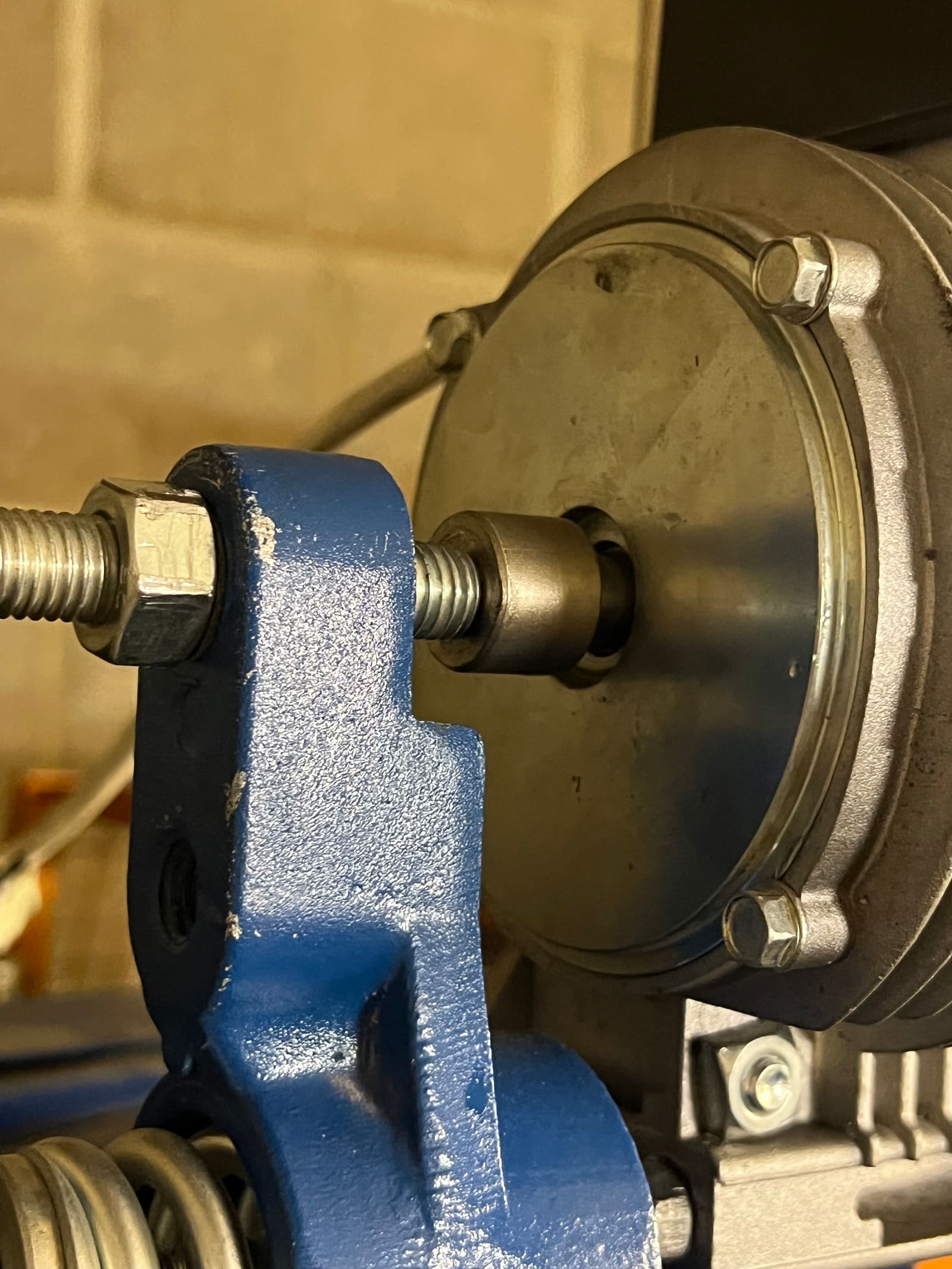
By hand, to the right tension, so the mechanical brake and the reprogrammed drive engage and release in step. It is exactly the kind of adjustment a remote reset never touches, and it is where the repeat faults finally stopped.
Sheet 07 · Back in service
Running quiet again.
The traction machine back under load, running clean through its full travel. No noise, no nuisance trips, no drama. The building got its lift back, and this time it stayed back.
Sheet 08 · Outcome
The work completed.
The fault history led to drive refurbishment, reprogramming and mechanical brake adjustment. The case file documents that work and the lift back in operation after the final visit. See our maintenance approach for ongoing care after a repair.

Sheet 09/09 · Case closed
When a lift keeps stopping, we find out why.
If your lift is generating call-out after call-out, the fault log already knows the reason. Independent, family-run, engineer-led, across London, Kent and the South East.