New installations
Site surveys and installation planning for hydraulic passenger and goods lifts in new and existing buildings.

Installation, maintenance and modernisation for hydraulic passenger and goods lifts.
From oil leaks and valve faults to power-unit upgrades, we support buildings across London, Kent and the South East.
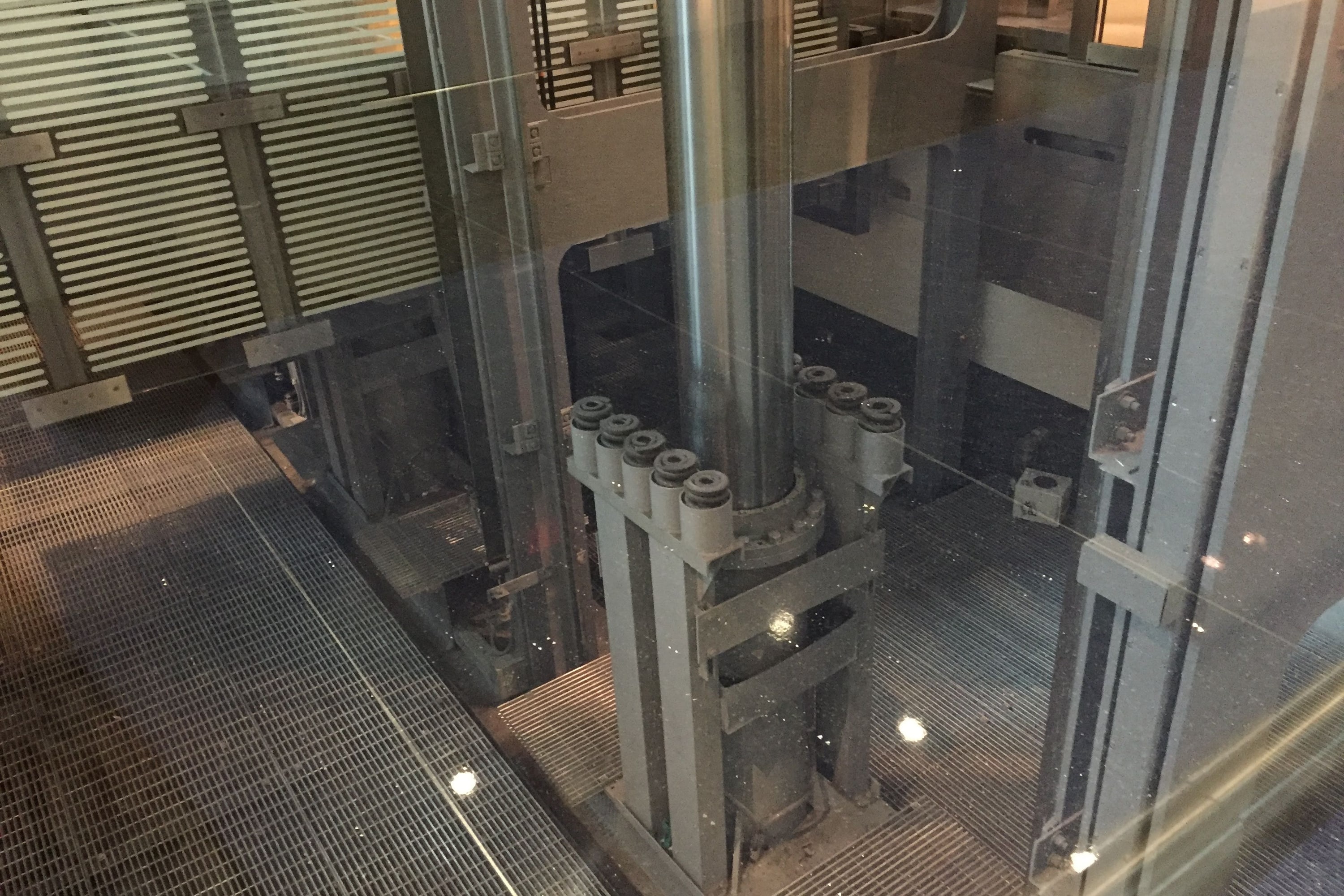
We work on direct-acting and roped hydraulic lifts, from routine servicing to repairs and planned upgrades.
Site surveys and installation planning for hydraulic passenger and goods lifts in new and existing buildings.
Oil, valve, cylinder and control-system maintenance, fault diagnosis and breakdown response.
Power-unit, valve and controller upgrades, with the scope based on the condition of the existing lift.
We trace the fault, explain the options and agree the work before proceeding.
Not sure what is causing the problem? See our lift faults guide or request a survey.
Travel, capacity, usage and available space all affect the choice.
| Consideration | Hydraulic | Traction |
|---|---|---|
| Building | Low and mid-rise applications | Often suited to longer travel |
| Usage | Passenger and heavy goods applications | Higher frequency and faster operation |
| Space | Cylinder, pipework and power unit | Drive equipment and counterweight |
| Existing lift | Power-unit and control upgrades | Drive and controller upgrades |
This is a starting point, not a specification. We assess the building and duty before recommending a system. See our passenger lift services for wider lift support.
Passenger and goods applications in low and mid-rise buildings, with the system selected for the site and its duty.
Checks are based on the lift, its condition and the agreed service scope.

A thorough examination is separate from routine maintenance. We help coordinate examinations and complete agreed work arising from the findings.
For a new installation or modernisation, the applicable requirements depend on the lift and the proposed work. These are established as part of the project scope.
Maintenance, repairs and examinations: the questions we are asked most often.
Yes. We install, service and maintain both direct acting and roped hydraulic lift systems across passenger and goods applications.
We inspect the power unit, hoses, valve block and cylinder seals, then provide clear recommendations for repair, reseal or replacement. Where appropriate we recommend biodegradable oil options.
Yes. We adjust valves and control settings to improve ride comfort and levelling accuracy. Where the controller is dated, we offer control system upgrades and ride quality tuning.
Hydraulic lifts used at work are subject to LOLER. Thorough examination is normally every 6 months for lifts carrying people and every 12 months for goods-only lifts, or in accordance with a written examination scheme drawn up by a competent person.
Yes. We offer 24/7 emergency call outs and trappings response across London, Kent and the South East.
There is no single lifespan for a hydraulic lift. Usage, condition, maintenance history and parts availability all matter. A survey can establish which components remain serviceable and where modernisation is needed.
Cost depends on travel, capacity, shaft works, finishes and the equipment required. We survey the site and provide an itemised quote for the proposed work.
It may be possible, subject to the building, available space and the necessary consents. We assess the installation with the project team before recommending a hydraulic system.
Speak to our team about maintenance, repairs or a survey.
